







It's The One Purebred German Shepherd Trick Every Person Should K…
페이지 정보
작성자 Jurgen Deeter 날짜25-02-22 14:35 조회3회 댓글0건본문
 Adopting a Purebred German Shepherd
German Shepherds thrive with consistency positive reinforcement, as well as rewarding training. They are intelligent, eager to please, and fast learners.
Their work ethic and dedication ensures they are naturally attentive to family members and are able to help in security. They are active and require ample space to exercise. They also need early socialization and obedience training in order to grow into confident, well-mannered dogs.
Origin
In the late 1800s Captain Max von Stephanitz was working to create a dog who would be unmatched in its herding capabilities. It took him years to find foundation stocks that matched his requirements both physically as well as mentally. At the dog show in 1899, he spotted a German shepherd named Hektor Linksrhein. Hektor was the result of several generations of selective breeding, and he perfectly matched Von Stephanitz's vision for what a herding breed ought to be. Hektor was declared to be the first German Shepherd Dog, and von Stephanitz founded the Verein fur Deutsche Schaferhunde (or Society for SchäFerhund Welpen Kaufen Schweiz the German Shepherd Dog).

In the second half of the 19th century, breeders worked to standardize herding dogs. They were able to preserve some of the traits that attracted Von Stephanitz, and these traits continue to make the German Shepherd breed popular today. For instance, a study revealed that German Shepherds can learn tasks in just five repetitions, and they obey the first command given at least 95% of the time.
These traits also make this breed among the top police and military working dogs, as well as a beloved pet for families. If properly socialized and trained, these dogs are ideal companions for children as well as other pets. They are usually reserved with strangers but generally affectionate with the people they love. A German Shepherd that is not socialized at a young age may later have trouble adjusting to new environments and may be anxious or stressed.
Because of their strong protective instincts German Shepherds are extremely cautious around strangers and make good guard dogs. They are smart and eager to please. This makes them extremely capable of being trained. They are agile, strong and can run up to 30 miles an hour.
Because of their wide range of uses and popularity, you will see a lot of German Shepherds around the world. The distinctive characteristics of the breed are easy to recognize, particularly if you are familiar with the standard of the breed. If you're unsure, ask your veterinarian for assistance to determine the breed. The majority of veterinarians are familiar with the breed standards for the majority of dogs and will be in a position to assist you quickly and efficiently.
Characteristics
Whether you're considering buying or adopting a purebred German Shepherd, it's important to find a reputable breeder who has pedigree papers that can be traced many generations back. Breeders with a good reputation are also members of organizations like the American Kennel Club, which will provide you with additional assurances of their honesty.
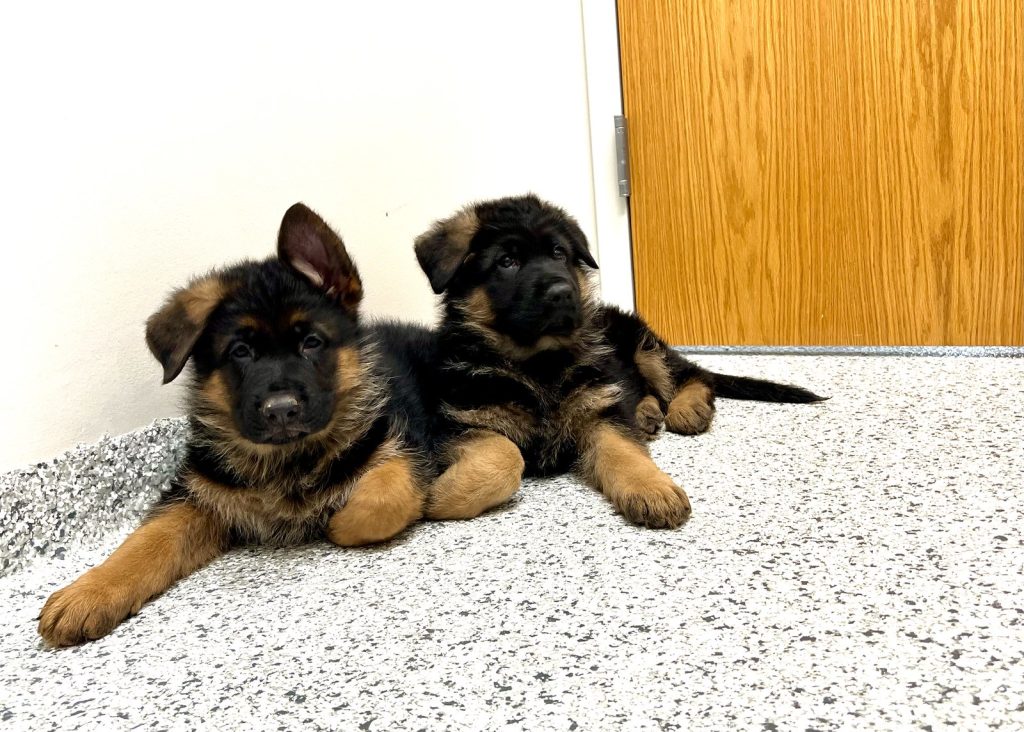
A true purebred German Shepherd has a hearty athletic build, deep-chested with a distinctive coats of black and tan. Adult males weigh 65 to 90 pounds and stand between 24 and 26 inches tall and females tend to be smaller at 50-70 lbs and 22-25 inches tall. They have long, erect ears and a ferocious stare. A well-trained German Shepherd may seem intimidating, but it will remain loyal to its owner and will not exhibit aggressive behavior towards humans or other dogs.
They are quick learners and very intelligent. Socialization is vital in their development to become confident well-mannered pets. They're naturally guardians and vigilant over their families, but will most likely allow strangers to enter their homes if they don't pose a threat.
These agile, powerful dogs are well-suited to a variety of types of work. They excel in military and police duty as well as serving in the role of service dogs for the disabled. They have a strong prey drive and will likely chase smaller animals. Therefore, Deutscher SchäFerhund Kaufen Schweiz a secure environment with plenty of positive socialization for other pets is important.
If properly trained and socialized German Shepherds can be loving, protective and extremely obedient pet companions. They're typically wary of other dogs and strangers, but with early socialization and ongoing positive training can learn to engage in playful interactions with other pets.
When evaluating a German Shepherd's quality look for a head shape that is proportional to the size of the dog and deutscher schäferhund kaufen österreich reinrassiger schäferhund kaufen schweiz (the full details) is well chiseled. The shoulders should be broad and square and straight, with a back that slopes slightly from the withers down to the croup. A curved back or excessive curvature of the rear legs is a sign of poor structural alignment. A well-constructed German Shepherd moves with a smooth, easy stride driven by a forward thrust of the hindquarters.
Temperament
German Shepherds are intelligent and curious dogs that are well-behaved, but not too eager to please. They have a strong loyalty for their family members and are cautious of strangers, which makes them a very effective guard dog. They thrive when their owners are active and will challenge them mentally and physically. They require plenty of daily exercise as well as a large backyard to play in. If they are not adequately stimulated, they might engage in destructive behavior such as chewing or digging.
When choosing a breeder, choose someone who is passionate about the breed and has a thorough knowledge of its temperament and personality. A trustworthy breeder will be able to discuss the history of the parents as well as the puppies. They will also be able to tell you whether the litter has been socialized and given obedience training. If a puppy has not been socialized, it may require a lot of obedience and behavioral training to prepare it for life as a pet for the family.
Puppies must be curious and outgoing, with a natural tendency for asserting themselves. If one puppy is more timid than others it should be taken as a warning sign. Additionally, a good German Shepherd should have a firm and consistent grip when picked up.
The muzzle is long and strong with a well-developed jaw and chin. The eyes are dark and almond-shaped. The nose should be dark (blue liver, blue or other colors are not acceptable). The teeth should be white and have an imposing scissor bite with the upper row of teeth being slightly larger than the bottom. The ears are erect and wide at the base and have pointed tips that may droop slightly when at rest.
The German Shepherd is a very versatile dog that can be used for many different activities including herding as well as search and rescue or bomb and drug detection, and guiding blind people. This versatility makes it among the most sought-after breeds in the world. It is crucial to remember that the temperament of a German Shepherd dog can be greatly affected by its training and environment.
Health
Purebred German Shepherds possess a high level of resilience and are able to thrive in a variety different circumstances. They make excellent companions, therapy dogs and service animals. They also excel in advanced obedience and security training, as well as competitive dog sports. Their strong work ethic can lead to careers in search and rescue, police work or military careers. Despite these impressive talents as with all breeds, GSDs are prone to certain health conditions.
As a larger breed GSDs are more susceptible to joint problems such as elbow dysplasia and hip dysplasia. These degenerative diseases can cause lameness and pain as your dog ages. Regular veterinary checkups can help minimize their effects.
Like other large breeds, German Shepherds are prone to Bloat (gastric dilatation volvulus), in which the stomach turns, filling with gas and cutting off the blood supply to the spleen and liver. If not treated, bloat could be a life-threatening condition that requires immediate medical treatment.
Because of their long, thick coats and darker colors GSDs are also more prone to heat stroke. On hot days, ensure they are hydrated and give them plenty of shade. We also check their eyes during every visit for signs of pannus, an immune-mediated eye disease that can cause blindness if not treated promptly.
Many hereditary and inherited diseases can impact your German Shepherd's digestive system, such as hemangiosarcoma cancer of the blood vessels, exocrine pancreatic dysfunction (EPI) as well as von Willebrand disease, and intervertebral disk disease (IVDD). The jelly-like cushion between the vertebrae in the spine may break or fall off and cause pressure to the spinal cord. The signs of IVDD are an inability to climb stairs or jump or jump, a hunched spine, discomfort when touched, and dragging the rear feet.
Like all dogs, you should feed your German Shepherd a high quality diet and avoid eating table food, which can cause weight gain and nutritional deficiencies. Regularly brush their coats to maintain a healthy and clean appearance. A bath is fine occasionally, but overdoing it can take away the natural oils that keep the coat shiny and healthy.
댓글목록
등록된 댓글이 없습니다.