







Why Vacuum Lidar Is Fast Increasing To Be The Trendiest Thing Of 2023
페이지 정보
작성자 Colette 날짜24-05-07 12:22 조회19회 댓글0건본문
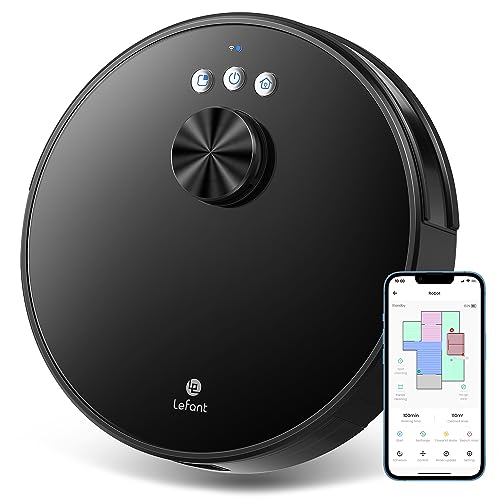 What is Vacuum Lidar?
Vacuum lidar is a type of sensor that emits laser beams that detect objects in the room and measure their distance from the robot, thereby giving it accurate mapping and navigation. It also makes it easier for robots to navigate through obstacles.
Without SLAM vacuums move in random patterns, and are unable to working around furniture. With SLAM they can move in a straight line and cling to the corners easily.
Accuracy and precision
A robot vacuum with lidar vacuum which doesn't come with lidar can only navigate by using visual data. This technology is still reliable, but its capabilities and compatibility are limited. Lidar provides a wide range of features such as navigation and obstacle detection. Lidar navigation is also more precise and precise than cameras-based systems.
What is the process behind this technology? It uses a laser pulse to scan the room, and measure distances. The device then creates a virtual map of the room using an array of points that correspond to different objects and surfaces within the room. The sensor tracks the time taken for each signal to hit the object then bounce back to give it an exact distance reading. This is what gives the technology its name - LIDAR or Light Detection And Ranging.
This allows the robot vacuum to accurately plan its path through the space and avoid obstacles. As a result, the lidar-equipped robot can avoid obstacles such as chairs or sofas that could hinder its path and complete the cleaning process quicker than a machine without this technology.
In addition to preventing collisions in addition, this system can help identify specific areas that require cleaning. This is especially useful for larger homes or when the vacuum cleaner needs to pay particular attention to certain rooms such as the kitchen or living room. It also helps to prolong battery life by eliminating unnecessary movements and requiring fewer trips to the charging station.
Some robot vacuums are also equipped with additional features that improve their performance, such as edge detection and the ability to recognize different types of floors. Edge detection is a crucial feature, especially for machines that are used on ledges and stairs. It will prevent the machine from falling over and causing damage to furniture or itself. Some models offer the option to manually override the auto mode when it is abutting an edge.
Other smart features that you will find in a robot with lidar include the ability to define virtual boundaries and define specific areas for cleaning. You can utilize the EcoVACS HOME app to create a map of your house and then draw virtual lines around areas that you want the vacuum to clean. This is useful if you have expensive rugs or robot vacuum With object avoidance lidar small spaces that are difficult for the robot to get into. The robot will follow the routes that are designated and only touch the area that is necessary, saving you from the frustration of missing a spot.
Real-time Mapping and Navigation
lidar sensor vacuum cleaner is able to map the environment in real time, unlike navigation systems that depend on cameras. This allows robot vacuums to have a better capability to navigate through spaces and avoid obstacles, which in turn reduces repeated cleanings and omissions while reducing the time needed to clean. Lidar-equipped vacuums also offer better performance in areas that have varying floor surfaces, as they can recognize the different patterns and textures of these floors. Unlike camera-based systems, lidar sensors aren't affected by changing lighting conditions and can identify objects on flat surfaces or even behind glass.
Vacuum lidar can analyze its surroundings and determine its location within the space. It then plans its route in real-time. It then moves through the room in a systematic manner, covering all edges and corners. It can also detect the presence of multiple items and determine their height and distance from the robot vacuum With object avoidance lidar.
Although lidar has significantly improved the capabilities of robotic vacuums, the technology is somewhat limited in terms of its accessibility. Lidar sensors are expensive, but ongoing improvements could make them more affordable in the future.
The top DEEBOTs that incorporate mapping technology have a variety of features to ensure that your home is clean and tidy. The Dreame F9, for example is equipped with 14 infrared sensors to detect obstructions and obstacles. It also has the ability to automatically alter its course if it comes across an object on the stairs or is approaching a doorway. It can also activate the cliff sensor to prevent it from falling down staircases.
In addition to SLAM other technologies that can perform similar functions in a vacuum cleaner include gyroscopes and cameras. Gyroscopes are a great way to keep the robot from bumping into things, and they can also help it form a basic map of the surrounding. They are not as accurate as systems using lasers, such as SLAM or Lidar. They can still provide the highest quality of navigation at a lower price than other options. Cameras are also an alternative to laser systems for mapping and navigation because they require less maintenance.
Obstacle Detection
Lidar-equipped vacuum robots can detect obstacles which allows them to navigate around them. This is because the sensors utilize laser beams to scan and map a space, measuring the time it takes for the light to bounce off objects before returning to the sensor. These sensors can then produce a 3-D map of space, providing real-time distance measurements, and removing the requirement for a camera.
While lidar sensors are extremely precise, they do have certain limitations. They can be prone to mistakenly interpreting reflective or clear surfaces for obstacles, have a difficult time in detecting small objects and are unable to working in rooms that have complex layouts. These limitations can impact the navigation capabilities of the vacuum cleaner, causing it to miss areas of the floor or not recognize objects that is in its route.
Manufacturers may combine several mapping technologies to give the best navigation experience. Certain models, like include both Lidar (Localization and Mapping) and SLAM. This is the most expensive but also provides the most precise and precise navigation. It lets the robot begin by constructing a map of your home, ensuring that it cleans in a systematic manner instead of randomly.
Other mapping techniques include gyroscopes as well as cameras. These systems can prevent robots from crashing into objects and help them form a basic home map, but they can't do as much as laser-based systems such as Lidar and SLAM.
Your personal preferences and budget will determine the kind of mapping system you decide to use. Some people might prefer the convenience of a robot with Gyroscopes, but others may require a more sophisticated navigation system that can eliminate the need for manual intervention and create more precise maps. Try different vacuum robots to see which one is suitable for you. Also, think about the features you value most.
Easy Maintenance
With the companion app, you can set up virtual boundaries to keep it out of certain areas or set room-specific cleaning schedules. You can also monitor its progress, alter the power settings, and check its HEPA filter and side brushes. The dirt compartment is accessible beneath the glossy black cover on top. It is recommended to empty it into a garbage container when it's full. You can also pause and restart cleaning sessions, and even share the vacuum cleaner with other household members.
댓글목록
등록된 댓글이 없습니다.